
How to stay consistent with exercise — even when motivation dips
It’s Friday evening, you planned a 30‑minute session, but after a long day you sink onto the couch and scroll instead. This exact scene is why people stop exercising: motivation is variable. The useful outcome here is simple—have a routine that survives low‑motivation days so you still move, progress slowly, and avoid the “all or nothing” trap.
Decide the one realistic result you’ll protect
Start by naming the smallest meaningful win you want to keep: “move for 10 minutes,” “do one strength circuit,” or “take a 20‑minute walk.” That explicit, minimal outcome becomes your touchstone when motivation drops. It’s easier to act on a tiny promise than a vague goal like “exercise more.”
Build a micro‑commitment plan that scales
Design two versions of every workout: a Short Version (3–15 minutes) and a Full Version (20–45 minutes). On high‑energy days do the Full; on low‑energy days do the Short. Short Versions should be so easy you can’t talk yourself out of them—five bodyweight squats, a 10‑minute walk, or one resistance‑band circuit.
Schedule workouts as appointments and anchor them
Put the Short Version on your calendar first. Anchor it to a reliable daily habit: after morning coffee, during your lunch break, or right after work before you change clothes. Use calendar alerts and, where helpful, set a 5‑minute prep alarm that cues getting shoes or rolling out a mat.
Create a grab‑and‑go environment
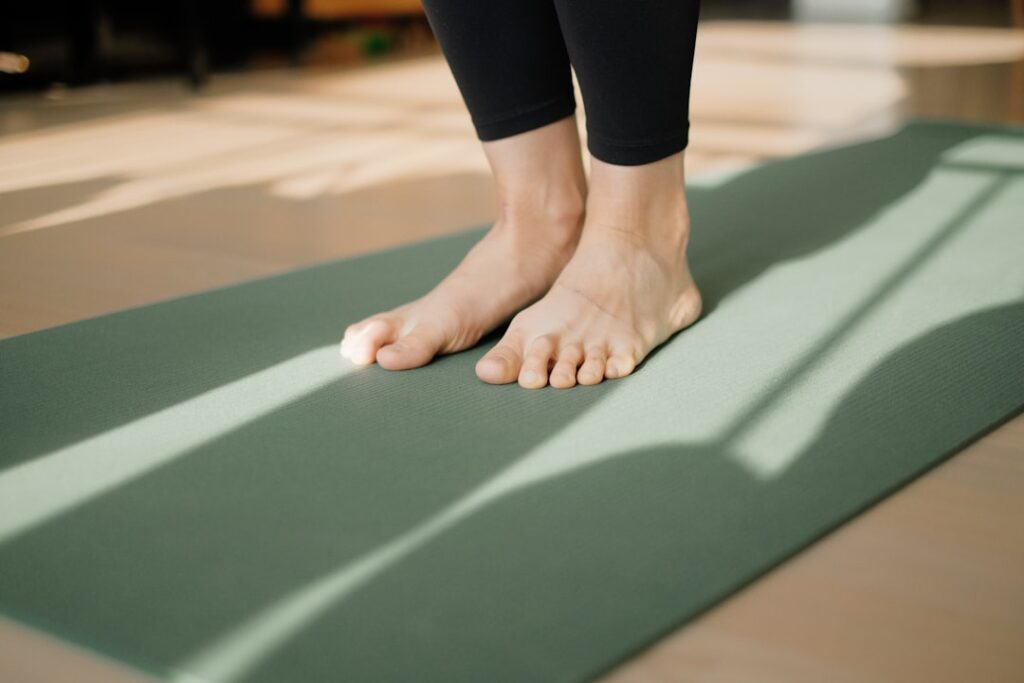
Make the easiest choice the default choice. Keep a yoga mat, resistance bands and a water bottle visible and accessible rather than stored away. A tidy corner with gear makes that 10‑minute promise less likely to be avoided because “I have to find my stuff.”
The Gruper Yoga Mat (above) is useful if your space needs a non‑slippery base and an item that’s quick to roll out for micro‑workouts, stretching, or mobility work. If you’re building short daily habits, an inexpensive, comfortable mat removes friction.
Use concrete cues and habit rules
- Rule: If it’s an “A‑day” (schedule allows), do Full Version; if “B‑day” (time or energy low), do Short Version.
- Cue: Place shoes by the door or mat by the couch so the visual prompt triggers action.
- Decision rule: If you skip two days in a row, shorten the next session rather than skipping again.
Put social accountability to work
Accountability multiplies adherence. Options include texting a friend when you finish, joining a short class once a week, or tracking workouts publicly in a group chat. A single weekly check‑in is often enough to maintain a baseline when motivation is low.
Make progress visible and forgiving
Track the behavior (did I move today?) rather than the outcome (how much weight did I lift?). Use a simple calendar, habit app, or a notebook where an X marks each day you completed at least the Short Version. Celebrate streaks in practical ways—extra rest, a favorite meal—so you associate consistency with positive reinforcement.
Plan for common problems before they happen
- Low energy: swap a strength day for mobility or a brisk 10‑minute walk.
- Busy schedule: agree to 5 minutes of focused movement and set a timer—micro‑wins add up.
- Travel: pack a mat or resistance band and use a one‑page circuit you can do in a hotel room.
Design one “default workout” that fits in your pocket: a warm‑up, three strength moves, and a short cooldown. When motivation is low, do only that default. Its predictability reduces decision fatigue.
Use simple tools that remove excuses
Equipment should lower barriers, not complicate them. Resistance bands, a small mat, or a single pair of light dumbbells let you complete effective micro‑workouts in limited space. Place them where you see them; out of sight is out of mind.
When consistency stalls: troubleshoot quickly
If you miss a planned session, follow this 3‑step recovery: 1) Do the Short Version within 24 hours; 2) Reassess the anchor—was the timing bad?; 3) Reduce frequency temporarily rather than stop. Interrupting a missed streak with a small, guaranteed win protects long‑term habit formation.
- Pick one minimal workout you’ll do on low‑motivation days.
- Anchor it to a daily habit and calendar appointment.
- Store one piece of gear (mat or bands) in plain sight.
- Choose an accountability method (friend, class, or tracker).
- Create a two‑version plan: Short and Full.
- Plan a one‑line recovery rule for missed days.
Consistency beats intensity: protect a small, nonnegotiable movement habit, make it easy to start, and have a short backup ready for low‑motivation days. These simple structures keep you moving and make weekly progress reliable.
What if I never feel motivated to start?
Commit to the Short Version as a nonnegotiable habit cue and anchor it to an existing routine (e.g., after coffee). Motivation will often follow action.
Are equipment purchases necessary?
No. A single mat or a set of resistance bands lowers friction but bodyweight movements and walking work perfectly for consistency.
How do I rebuild consistency after a long break?
Begin with repeatable Short Versions, track daily completion (not performance), and reconnect with an accountability partner for support.
Where can I find simple at‑home strength plans?
For a beginner‑friendly strength progression, see our guide on starting strength training at home: How to Start Strength Training at Home.