Quick answer: buy six versatile items to cover every workout
For a simple, space-efficient setup, get (1) resistance bands, (2) adjustable dumbbells or a kettlebell, (3) a yoga mat, (4) a suspension trainer or doorway pull-up bar, (5) a jump rope, and (6) a foam roller. These pieces of home workout equipment let you do strength, conditioning, mobility and recovery without a bulky bench or rack.
How to pick equipment based on space, budget and goals
Decide which priority matters most: strength gains, fat loss/cardio, or flexibility and recovery. If strength is the goal and you have a small budget but some space, prioritise adjustable dumbbells or a single heavy kettlebell. For tiny apartments or travel, resistance bands plus a suspension trainer give the widest exercise variety for minimal storage. Combine one strength option with a mat and a recovery tool and you’ll cover nearly every program.
Essential home workout equipment — what to buy and why
- Resistance bands (light-to-heavy set)
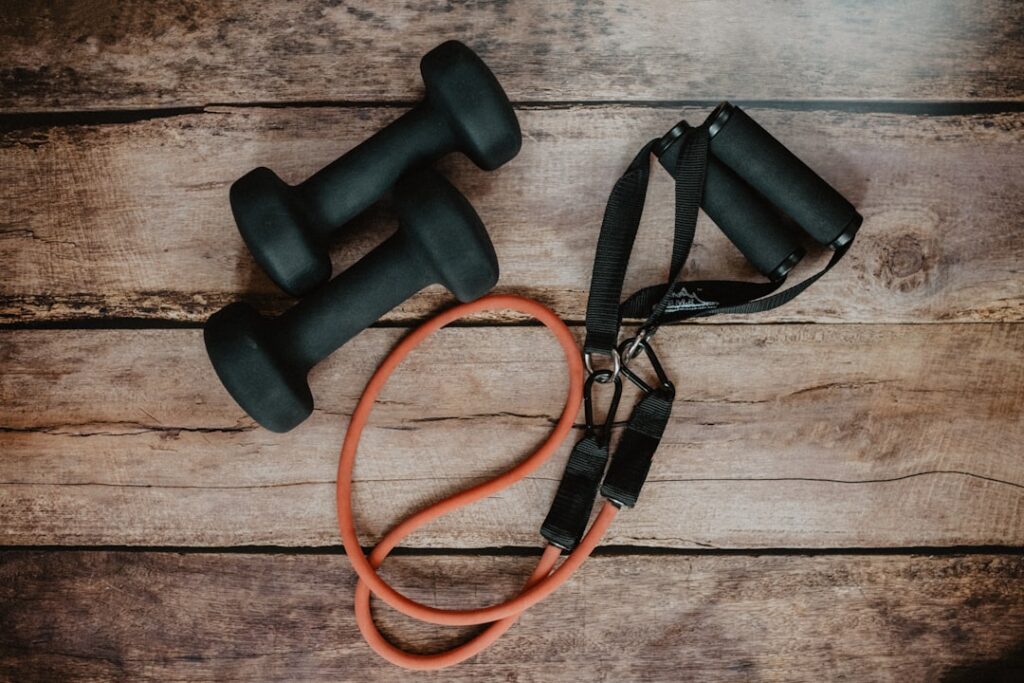
Why: They provide scalable resistance, take almost no space, and let you do rows, presses, squats, glute work and assisted pull-ups. Tip: get a set with loop bands and long tube bands with handles to cover both lower- and upper-body movements. - Adjustable dumbbells or a kettlebell
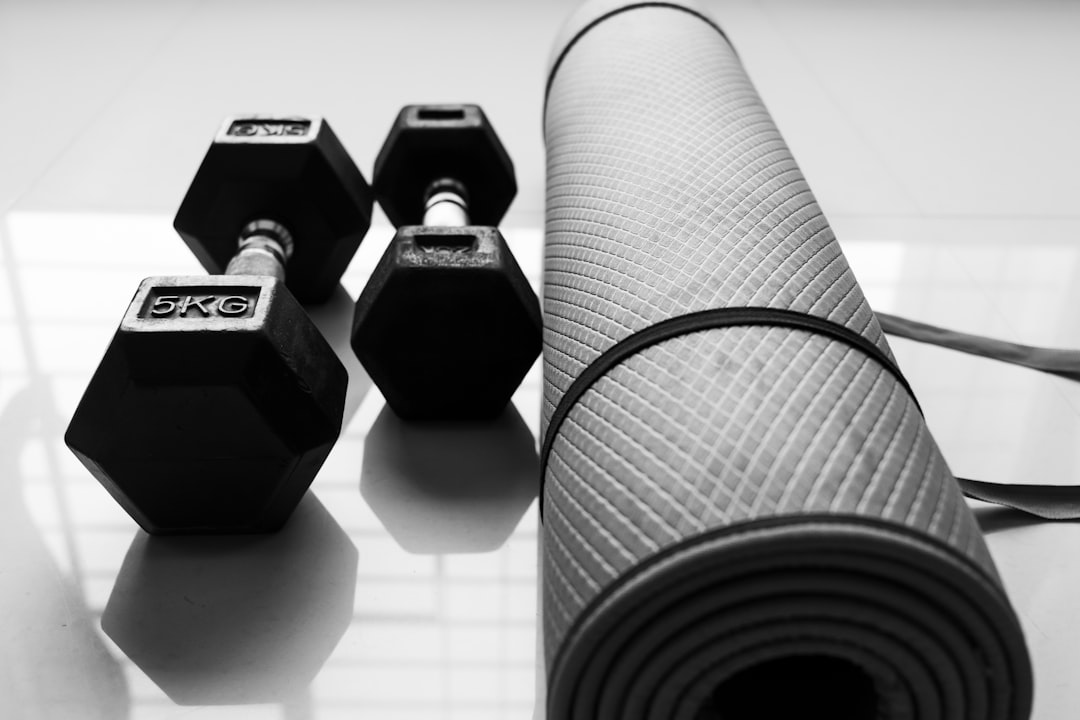
Why: Free weights are the most direct way to load classic compound lifts—deadlifts, presses, rows and loaded carries. Choose adjustable dumbbells if you want multiple weights without racks; pick a kettlebell if you prefer swings and single-arm work. - Yoga mat
Why: Protects joints for floor work, gives traction for mobility drills and is your base for bodyweight circuits. Look for 4–6 mm thickness for general workouts. - Suspension trainer or doorway pull-up bar
Why: Adds scalable pulling and core exercises everywhere you can anchor it. A suspension trainer also enables inverted rows, chest presses and single-leg variations with minimal hardware. - Jump rope
Why: Cheap, compact cardio that builds coordination and conditions the heart without needing a treadmill. Pick a speed rope for conditioning and a heavier rope for strength-endurance. - Foam roller or massage tool
Why: Prioritise recovery—mobility, pain prevention and shortened warm-ups. A 12–18″ foam roller fits in closets or under a bed.
How to choose between bands and dumbbells
Both are useful; choose based on space and how you like to progress. Bands give linear loading that’s easy on joints and portable for travel. Dumbbells let you track incremental weight increases precisely and are better for heavy lower-body work if your goals include strength or hypertrophy.
Recommendation that fits both budgets and small spaces:
How to set up and store your compact gym
Designate a 6–8 ft² corner as your “workout zone.” Keep the yoga mat rolled, bands in a small bin, and the foam roller tucked vertically. Adjustable dumbbells can sit on a low shelf or in a labeled storage bag. Use wall hooks or an over-the-door organizer for the suspension trainer and rope. Clearing the area quickly reduces friction—if setup takes under 60 seconds you’ll be more consistent.
Simple weekly layout for balanced training
Plan three focused sessions: one strength (dumbbells/kettlebell), one mixed full-body (bands + suspension trainer), and one conditioning/mobility (jump rope, circuits, foam rolling). If you’re new to strength training, see our beginner strength guide for progression ideas and rep ranges.
Common problems and how to adapt equipment
- Issue: No room for dumbbells
Adaptation: Use heavier loop bands anchored under a chair or door and increase time under tension or add tempo changes for more intensity. - Issue: Door-frame suspension trainer feels insecure
Adaptation: Use a dedicated anchor strap around a sturdy beam or a portable freestanding anchor; always test with bodyweight before adding dynamic moves. - Issue: Bands slip or snap
Adaptation: Replace bands showing nicks and avoid overstretching beyond manufacturer recommendations; use a long tube band with handles for safer grip during pulling motions. - Issue: Noise or neighbors complain
Adaptation: Replace jumping with high-knee marches, use a softer mat for landing, and schedule higher-impact workouts when it’s least disruptive.
Upgrades and one-time buys that change your routine
After the essentials, consider: a pair of bumper plates and a barbell if you have room and want barbell lifts, a weight bench for bench presses and step-ups, or a compact plyo box for jumps and elevated lunges. Also consider a small storage solution—an under-bed box or a wheeled crate—that makes the gym tidy and more likely to be used.
Keeping costs down without compromising results
Buy versatile items first: bands, one kettlebell or adjustable dumbbells, and a mat. Wait to buy specialty gear until you understand your program’s needs. Check local secondhand listings for dumbbells or kettlebells—weights rarely wear out and are often sold by people who’d rather not move them.
- Define your primary goal: strength, fat loss, or mobility.
- Measure storage space where you’ll keep equipment.
- Pick one strength tool (bands or dumbbells) as the starter purchase.
- Include one recovery item (foam roller) from the beginning.
- Plan how you’ll anchor suspension gear safely.
A small, consistent kit—resistance bands, an adjustable weight or kettlebell, mat, suspension trainer, jump rope and foam roller—lets you train strength, cardio and mobility in tight spaces. Start with what solves your biggest barrier (space or load) and add one upgrade after you’ve built a habit.
Do I need both bands and dumbbells?
No—bands can substitute for many dumbbell moves and are ideal for space-limited setups; dumbbells are better when you need precise heavy loading.
Which suspension trainer should I buy?
Pick a kit with a door anchor and reinforced straps; a simple TRX-style trainer covers rows, presses and core moves. Verify door-frame weight limits before use.
How much space do I actually need?
About 6–8 square feet is enough for most routines; allow extra length for kettlebell swings or jump-rope work (roughly 9–10 ft in one direction).
What’s the cheapest way to start?
Buy a set of resistance bands and a basic mat—these two items let you perform a wide exercise selection at minimal cost.
How do I make equipment maintenance easy?
Wipe down bands and handles after sweaty sessions, store weights off damp floors, and inspect bands for nicks to prevent snapping.